
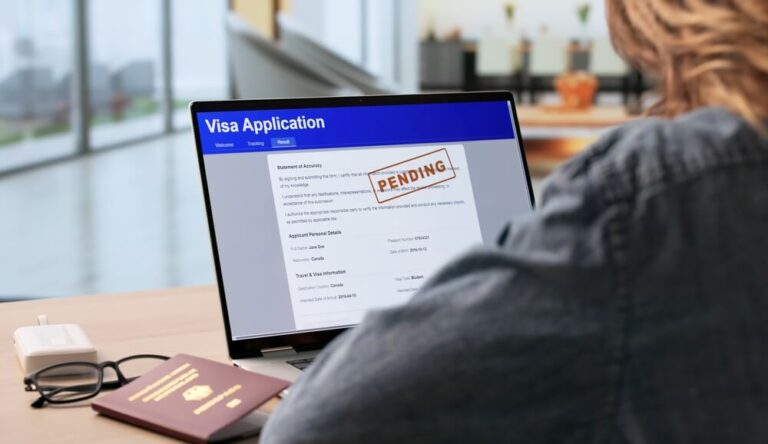
The marriage green card processing time can range from several months to more than a year, and some cases take considerably longer. There is no single timeline that applies to every married couple.
The total wait depends on where the immigrant spouse is living, whether the petitioner is a United States citizen or lawful permanent resident, which government office handles the case, whether an immigrant visa is available, and whether USCIS or a consular officer needs additional evidence.
Two couples can file similar applications on the same day and receive decisions months apart.
That difference does not always mean something has gone wrong. Immigration agencies process cases through different offices, and each application has its own evidence, background, interview requirements, and legal questions.
Understanding the stages of the process can help couples set realistic expectations and recognize when a delay may require attention.
What Is the Current Marriage Green Card Processing Time?
USCIS processing data offers a useful starting point, but it should not be treated as a promise.
Through May 31, 2026, the USCIS national median processing time for Form I-130 petitions filed for immediate relatives was 12.9 months. The national median for family-based Form I-485 applications was 5.8 months.
Those figures should not simply be added together.
When the immigrant spouse is eligible to adjust status as the immediate relative of a United States citizen, Form I-130 and Form I-485 may often be filed at the same time. USCIS can work on both forms during the same general period, although one may be approved before the other.
A median also does not mean every case will finish within that number of months. Half of the completed cases may take longer, and the figures do not capture every factor affecting an individual application.
The most useful estimate comes from checking the processing time for the specific form, category, and office shown on the applicant’s receipt notice.
The First Question Is Where the Immigrant Spouse Lives
The green card process follows one of two main routes.
A spouse who is eligible and physically present in the United States may apply through adjustment of status. A spouse living outside the country usually completes immigrant visa processing through a United States embassy or consulate.
Both routes can lead to lawful permanent residence, but the stages and waiting periods are different.
An adjustment case remains primarily with USCIS. A consular case begins with USCIS, moves to the National Visa Center, and then proceeds to an embassy or consulate.
A general estimate found online may therefore be misleading unless it clearly identifies which route it describes.
How Long Does Adjustment of Status Through Marriage Take?
Adjustment of status allows an eligible person already inside the United States to apply for permanent residence without completing the immigrant visa process abroad.
In a typical case involving the spouse of a United States citizen, the couple may file Form I-130 and Form I-485 together. The filing may also include financial sponsorship documents, the required medical examination, evidence of relationship, and separate applications for employment or travel authorization, when appropriate.
After USCIS accepts the filing, the agency issues receipt notices. The applicant may then receive a biometrics appointment notice unless USCIS can reuse previously collected biometrics.
The case continues through background review, document examination, and possible interview scheduling. USCIS may also send a Request for Evidence when required information is missing, outdated, inconsistent, or insufficient.
Some cases receive a decision without a lengthy interview process. Others require both spouses to appear and answer questions about the relationship, immigration history, addresses, finances, and shared life.
The local field office can significantly affect the timeline. A couple living in Northern Virginia may have a different experience from a couple filing the same forms in another part of the country because office workloads and interview capacity vary.
Why the Form I-485 Median Does Not Tell the Whole Story
A published Form I-485 processing time may look shorter than the time a couple has actually been waiting.
That can happen because the green card application does not exist in isolation.
USCIS may need to decide the Form I-130 petition before approving permanent residence. The agency may transfer the file, schedule an interview, wait for a response to a notice, or conduct additional review.
Visa availability can also affect certain applicants.
USCIS processing time calculations may exclude cases that cannot receive final action because the relevant immigrant visa category has retrogressed. This means the published figure may not reflect the entire wait experienced by spouses of lawful permanent residents.
The case status and the Visa Bulletin should therefore be reviewed together when a numerical visa limitation applies.
How Long Does Consular Processing Through Marriage Take?
Consular processing normally begins when a United States citizen or lawful permanent resident files Form I-130 for a spouse living abroad.
USCIS must first approve the petition.
After approval, USCIS transfers the case to the National Visa Center. The National Visa Center creates the case, collects fees, and requests the immigrant visa application, financial sponsorship forms, and civil documents.
The applicant generally submits Form DS 260, passport information, birth and marriage records, police certificates when required, and other country-specific documents. The petitioner must also provide an Affidavit of Support and supporting financial records.
Once the National Visa Center accepts the required documents, the case becomes documentarily complete.
That does not always mean an interview will occur immediately.
The National Visa Center must work with the assigned embassy or consulate to schedule the immigrant visa interview. Interview availability depends heavily on the post’s staffing, workload, operating conditions, security review capacity, and the number of cases already waiting.
Some embassies are scheduling relatively recent cases. Others have substantial interview queues.
For this reason, the consular marriage green card processing time can vary greatly by country, even when two cases become documentarily complete in the same month.
What Are the National Visa Center Timeframes in 2026?
National Visa Center timeframes are updated weekly.
As of July 20, 2026, the National Visa Center was creating cases received from USCIS on July 12, 2026. It was reviewing submitted documents received on June 10, 2026.
This snapshot suggests that case creation was moving relatively quickly at the time, whereas document review involved a longer wait.
These dates do not predict when an embassy interview will occur.
Interview scheduling is a separate stage, and the Department of State maintains an immigrant visa scheduling tool showing which documentarily complete cases embassies are currently scheduling.
Couples completing consular processing should monitor both the National Visa Center timeframes and the scheduling status for the assigned embassy.
Does the Petitioner’s Immigration Status Change the Timeline?
Yes.
The spouse of a United States citizen is classified as an immediate relative. Immigrant visas are not subject to the same annual numerical waiting line as family preference categories.
This means an otherwise eligible spouse of a United States citizen does not have to wait for a priority date to become current before a visa number is available.
The spouse of a lawful permanent resident falls within the F 2A family preference category.
Although a lawful permanent resident may file Form I-130 for a spouse, final green card approval depends on visa availability under the monthly Visa Bulletin.
The July 2026 Visa Bulletin listed a final action date of January 1, 2025 for most F 2A applicants and January 1, 2024 for applicants chargeable to Mexico. These dates can advance, remain unchanged, or move backward in later months.
A spouse of a lawful permanent resident may therefore face two separate waits.
The first is the government’s time for reviewing the petition and application.
The second is the wait for an immigrant visa number to become available.
If the petitioner becomes a United States citizen while the case is pending, the petition may potentially be upgraded to the immediate relative category. The government must be notified properly so the case can be updated.
What Happens During the Waiting Period?
Waiting for a marriage green card does not mean that nothing is happening.
USCIS may be conducting identity checks, reviewing prior immigration records, comparing forms, evaluating evidence of relationships, and determining whether an interview is needed.
In adjustment cases, applicants must continue following the rules that apply to their immigration situation.
A pending Form I-485 does not by itself give unrestricted permission to work or travel. Employment and international travel may require separate authorization or continued valid status, depending on the circumstances.
Couples should also continue building a natural record of their shared life.
A genuine marriage continues developing after the filing date. Updated leases, insurance policies, tax records, photographs, travel records, correspondence, financial accounts, and evidence of shared responsibilities may become useful at an interview or in response to a government request.
This does not mean couples should create documents only for immigration purposes. The goal is to preserve authentic records that already arise from living a real married life.
What Can Delay a Marriage Green Card?
Many delays begin with issues that could have been identified before filing.
A missing signature or incorrect payment can prevent USCIS from accepting the application. An incomplete Affidavit of Support can lead to a Request for Evidence. Missing civil records can prevent the National Visa Center from marking a consular case complete.
Other delays arise because the facts require closer review.
USCIS or a consular officer may need additional time when the application includes conflicting addresses, incomplete employment history, a prior visa overstay, unauthorized employment, previous marriages, criminal records, earlier immigration petitions, or statements that do not match prior government filings.
A short marriage does not automatically create a delay. Neither does a large age difference, cultural difference, or limited wedding ceremony.
However, unusual facts, combined with weak or inconsistent evidence, may lead the officer to ask additional questions about whether the marriage was entered into in good faith.
Security checks and administrative processing can also continue after an interview. The length of that review is difficult to predict because it depends on the reason for the additional processing.
Can a Request for Evidence Add Months to the Process?
A Request for Evidence can extend the timeline significantly.
USCIS must prepare and issue the notice. The couple then receives a response period, gathers the requested material, and submits the response. USCIS must receive, place, and review that response before returning to the case.
The additional wait does not come only from the time the couple spends preparing documents.
The case may return to an officer’s review queue after USCIS receives the response.
Common requests in marriage green card cases may involve financial sponsorship, medical documentation, proof of lawful entry, civil records, or stronger evidence of a genuine marriage.
Submitting an organized case does not guarantee USCIS will not request additional evidence. It can, however, reduce avoidable requests caused by missing or unclear information.
Does the Marriage Green Card Interview Slow the Case?
An interview adds another stage to the scheduling process, but it also allows the couple to clarify the record.
The wait depends partly on appointment capacity at the local USCIS field office or embassy.
At an adjustment interview, the officer may review identity documents, immigration history, financial sponsorship, admissibility, and the couple’s relationship. Both spouses should understand what was submitted and be prepared to answer honestly in their own words.
At a consular interview, the immigrant spouse generally attends without the petitioner unless the embassy provides different instructions. The consular officer reviews eligibility, the marriage relationship, financial sponsorship, civil documents, medical results, and possible grounds of inadmissibility.
Approval may occur at or shortly after the interview. In other cases, the officer may request another document or place the application into administrative processing.
An interview date should therefore not be treated as a guaranteed approval date.
Can Premium Processing Speed Up a Marriage Green Card?
Premium processing is not available for Form I-130 or a marriage-based Form I-485.
Paying an additional USCIS premium processing fee is therefore not an option for moving an ordinary marriage green card case to the front of the line.
USCIS and the Department of State may consider expedite requests in limited circumstances, but approval is discretionary and requires a compelling reason supported by evidence.
Wanting to reunite sooner, feeling frustrated with the wait, or having ordinary travel plans usually does not establish an exceptional need for expedited treatment.
Couples should be cautious of anyone who promises a guaranteed faster approval through personal connections or a special filing method.
When Should a Couple Contact USCIS or the National Visa Center?
A case should not be treated as delayed merely because another couple received a faster decision.
The first step is to compare the case with the official processing information for the correct form and office.
USCIS generally allows a case inquiry after the receipt date falls outside the posted normal processing time. The agency’s online processing tool provides a date for case inquiries based on the selected form, category, and office.
For consular cases, the National Visa Center publishes weekly dates showing which submissions it is reviewing. An inquiry may be appropriate when the case is beyond those published timeframes.
After a case becomes documentarily complete, applicants should review the immigrant visa scheduling status for their specific embassy rather than relying on a national estimate.
A legal review may be appropriate earlier when the case involves status expiration, urgent travel, a criminal record, prior removal proceedings, fraud or misrepresentation concerns, family changes, or a government notice with a response deadline.
When Will the Physical Green Card Arrive?
Approval and receiving the physical card are separate events.
An applicant approved through adjustment of status usually receives an approval notice followed by card production and delivery.
A spouse approved through consular processing becomes a lawful permanent resident upon admission to the United States with the immigrant visa. USCIS then produces and mails the physical green card after the immigrant fee has been paid and the admission information has been processed.
USCIS advises that the card may take up to 90 days after entry, or up to 90 days after payment when the immigrant fee was paid after entry.
Applicants should keep their mailing address current and follow the official process for reporting a card that does not arrive within the expected period.
Will the Spouse Receive a Two-Year or Ten-Year Green Card?
The length of the first green card depends on how long the couple has been married when permanent residence is granted.
When the marriage is less than two years old on the date of adjustment approval or admission with the immigrant visa, the spouse generally receives conditional permanent residence for two years.
The couple must later file Form I-751 during the required period before the conditional card expires, unless the immigrant spouse qualifies to request a waiver of the joint filing requirement.
When the marriage is already at least two years old at the time permanent residence is granted, the spouse generally receives a regular ten-year green card.
The age at the time of marriage at the time of filing does not control this issue.
The important date is when permanent residence is actually granted.
A case that takes longer to process may therefore cross the couple’s second wedding anniversary and result in a ten year card rather than a conditional card.
How Can Couples Avoid Unnecessary Delays?
No lawyer or applicant can control government workloads.
Couples can control the quality and consistency of the case they submit.
A carefully prepared filing should use the correct forms, current editions, proper fees, complete signatures, and required supporting evidence. The information should match prior immigration filings, travel history, employment records, civil documents, and tax records.
The couple should also understand the legal issues before filing.
Potential concerns involving entry, status, criminal history, prior relationships, financial sponsorship, or previous government statements should be evaluated rather than hidden or ignored.
The goal is not to create a perfect-looking application.
The goal is to present a truthful, complete, and organized case that allows the officer to understand why the applicant qualifies.
Final Thoughts
Marriage green card processing time depends on much more than the date a couple sends the application.
The filing route, petitioner’s status, visa availability, USCIS office, embassy workload, evidence, background history, and interview needs can all affect how long the process takes.
Current national medians provide a useful reference, but they cannot predict the exact decision date for an individual couple.
The best approach is to understand every stage, prepare the case carefully, respond promptly to government notices, and monitor the correct official processing tools.
The Immigration Law Office of Federico Serrano assists couples throughout Fairfax County, Loudoun County, Arlington County, and Prince William County with marriage green card applications. Our office helps clients evaluate eligibility, prepare relationship evidence, address financial sponsorship, respond to USCIS concerns, and develop a strategy for adjustment of status or consular processing.
